The 50/30/20 Rule: The Simplest Budget You Can Start Today
By the My Money Report team ·
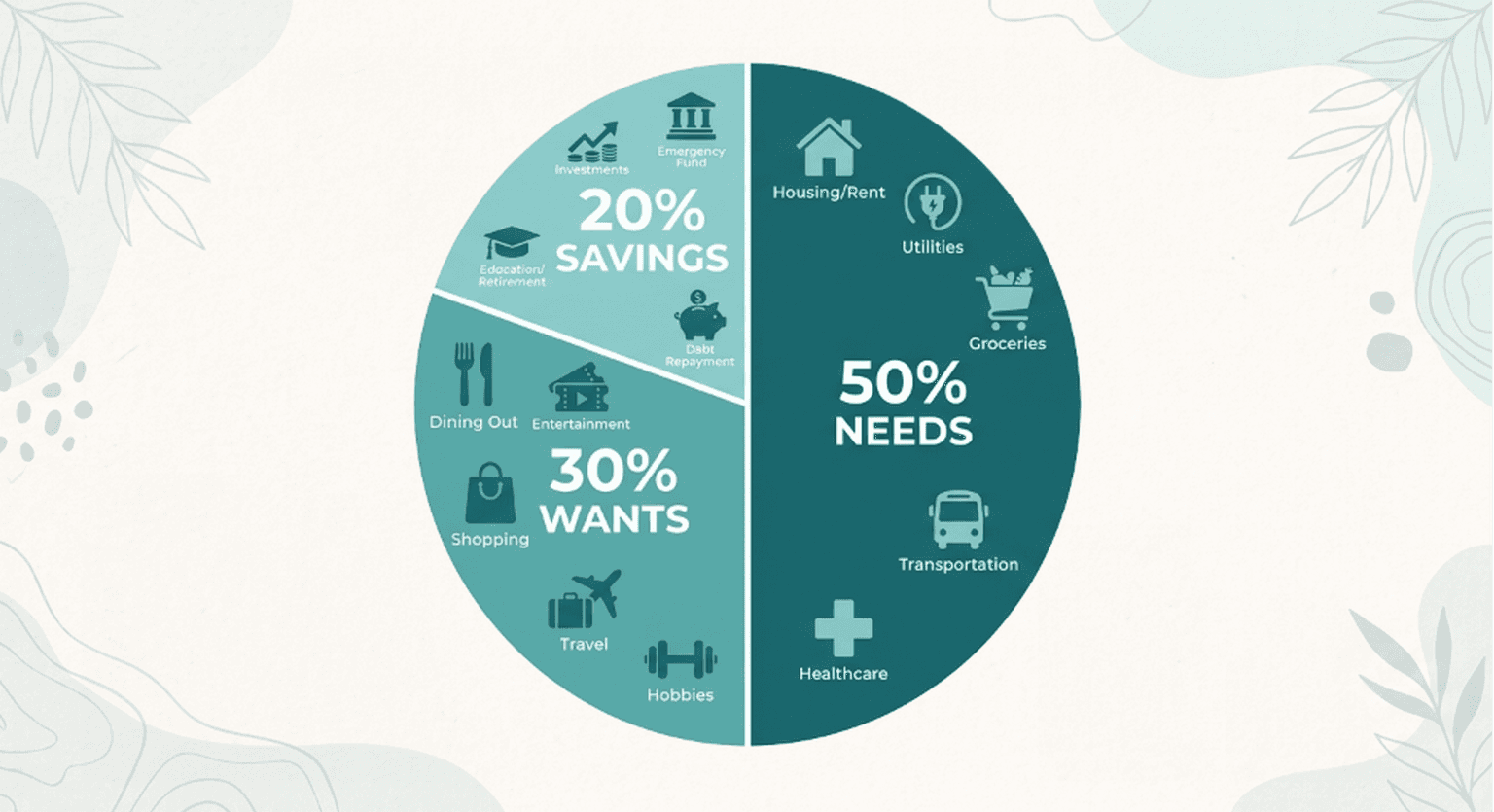
If budgeting feels complicated, the 50/30/20 rule is the antidote. It is a single sentence you can remember forever: spend 50% of your take-home pay on needs, 30% on wants, and put 20% towards savings and debt. That is the whole system.
The rule was popularised by US Senator Elizabeth Warren, a bankruptcy expert, in her 2005 book All Your Worth: The Ultimate Lifetime Money Plan, co-written with her daughter Amelia Warren Tyagi. It has endured because it is flexible and almost impossible to forget. For a deeper walkthrough, this Forbes Advisor guide to the 50/30/20 budget is a solid reference.
How the three buckets work
The first step is to work out your after-tax income - the money that actually lands in your account. Then you divide it three ways.
- 50% - Needs. The things you genuinely cannot skip: rent or mortgage, utilities, groceries, insurance, minimum loan payments and transport to work.
- 30% - Wants. The life-is-for-living category: eating out, streaming services, hobbies, travel, the upgraded phone.
- 20% - Savings and debt. Building an emergency fund, investing, and paying down debt faster than the minimum.
A quick example. If your monthly take-home pay is 2,000, that is 1,000 for needs, 600 for wants and 400 for savings. Simple enough to do in your head, which is exactly the point.
The line between a need and a want
Most of the value in this rule comes from one honest question you ask of every expense: is this a need or a want? A basic phone plan is a need. The premium unlimited tier is partly a want. Groceries are a need, but the daily takeaway coffee is a want.
You do not have to eliminate wants. Thirty percent is a generous, guilt-free allowance. The rule simply makes you name each purchase, and naming it is what stops wants from quietly swallowing your savings.
Where the rule falls short
No single ratio fits everyone, and it is fair to be honest about that.
- In cities with very high rent, the "needs" half can be impossible to hit. The percentages are a target to aim for, not a law of physics.
- If you are aggressively paying off high-interest debt or saving for a house, you may want to push savings well above 20%.
- Some people prefer a leaner variation, such as 60/30/10 or 70/20/10, depending on their goals.
Treat 50/30/20 as a starting point, then bend the numbers to your reality. The framework matters more than the exact percentages.
The hard part: knowing your real numbers
Here is the catch that trips most people up. You cannot follow 50/30/20 if you do not know what you actually spend. Almost everyone underestimates their "wants" spending, because it arrives in dozens of small, forgettable transactions.
This is where consistent tracking turns a nice idea into a working budget. When every expense is recorded and tagged, you can see your true split at a glance - and it is often a surprise the first month.
Making it work with My-Money.Report
The habit behind My-Money.Report maps neatly onto the 50/30/20 rule. You plan what you intend to buy, you write down the price when you pay, and the app turns those entries into clear charts. Because you record each expense yourself rather than importing it silently from a bank, you stay aware of which bucket every purchase belongs to.
Use categories and tags to mark spending as a need or a want, set a savings target for the period, and let the charts show you whether your real life matches your intended 50/30/20. If it does not, you will see exactly which bucket needs attention - and that is the whole job of a budget.
Start this month. Pick your three numbers, track honestly for thirty days, and adjust. A budget you can remember is a budget you will actually keep.